Much of the traditional telephone network still serving Maryland businesses was built decades ago by Ma Bell. It was an extraordinarily reliable network that served homes and businesses for generations. But technology has evolved, and the incumbent local exchange carriers (Verizon in this region) that inherited much of this infrastructure are now retiring their aging copper networks. Maintaining that infrastructure has become increasingly expensive, particularly as customers migrate to fiber and IP-based communications and fewer subscribers remain to support the cost.
For businesses that still depend on traditional POTS lines for a variety of reasons, the consequences are significant. Monthly costs have risen dramatically, service options are shrinking, and the long-term availability of these lines is increasingly uncertain.
Most businesses recognize that traditional POTS service is on its way out. The real challenge isn’t understanding why they need to replace it. It’s figuring out how to replace it without the expense and disruption of installing new cabling throughout their buildings.
Start by finding out what is on those lines
Before cancelling anything, work out what each analog line does. The list in a typical building is short and almost every item on it matters to somebody:
- An elevator emergency phone
- A fire alarm communicator
- A burglar alarm dialer
- A gate or door station
- A fax line in accounting
- A modem sitting on an HVAC or energy management system
- A courtesy phone in a lobby
- And reliably two or three lines nobody can identify at all
Chase the unidentified ones down first. We have found lines still billing monthly for a tenant who moved out years earlier. We have also found a line that turned out to be the only path a fire alarm had to its monitoring company, which is a different kind of discovery entirely.
What replaces them
For ordinary lines — the fax, the courtesy phone, the back office line — the replacement is usually an analog telephone adapter that puts the existing device on your network, or a SIP line on the phone system you already have.
Code-required devices are not ordinary lines. Elevator emergency phones and fire alarm communications carry their own requirements, the replacement has to be listed and approved for that purpose, and your alarm company, your elevator contractor and the local fire marshal all have a say. A general-purpose adapter is not automatically acceptable on a fire alarm circuit. Treat those as their own small project rather than a line item.
The cabling trap
Typically, this is where projects stop. Whatever replaces an analog line is almost certainly an IP device, and an IP device wants Ethernet, usually with power over that same cable. Standard Ethernet runs about 328 feet — 100 meters — and expects four-pair cable.
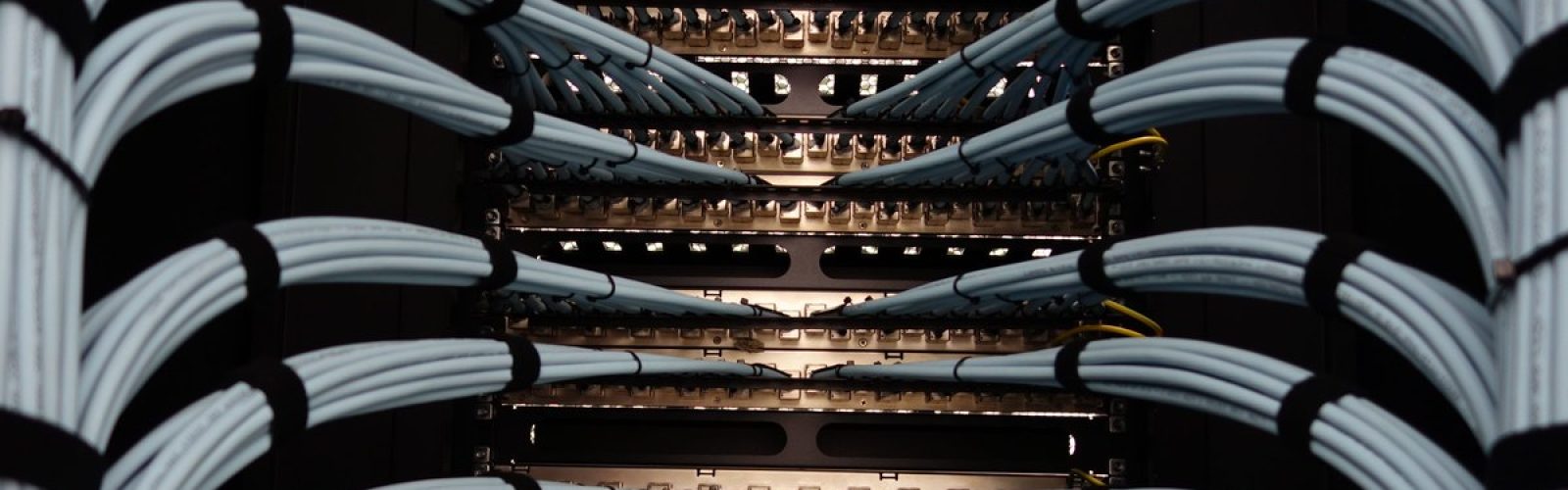
Buildings constructed “back in the day” have a single pair of telephone copper to each location. No Cat5/6, frequently no conduit to pull anything new through, and distances that exceed what standard Ethernet can reach even if pulling cables were easy.
So, the cabling quote arrives and it is larger than the phone system itself. In a school, a hospital wing, a parking structure or anything spread across more than one building, it can be dramatically larger. That is the number that kills the project, and it has nothing to do with the phones.
Long-reach PoE: using the wire already in the walls
This is a possibility that doesn’t get talked about enough. There is a category of equipment made specifically to carry Ethernet and power over the Cat3 wire a building already has.
Long-reach PoE switches and extenders run Ethernet and PoE over a single pair of existing telephone copper, over existing coax, or over multi-pair cable already in place. The reach is the point: roughly 2,000 feet over a single pair, and considerably farther over coax, against about 328 feet for standard Ethernet. The IP phone, camera or door station at the far end gets data and power, and nobody opens a wall. NVT Phybridge is the product line we deploy most often.
Where this option really excels is the awkward location: an elevator machine room, a gate at the end of a driveway, a stairwell phone, a camera on an outbuilding, a long corridor in an older school.
What it is not is a replacement for structured cabling when you also need Gigabit Ethernet to every desktop. The long-reach ports are typically 10/100, which is ample for a phone, a camera or a door station and not what you would run a modern workstation on. Anyone who tells you it solves every cabling question is overselling it.
What to ask before you sign anything
- Ask for an inventory of every analog line and what each one does, with the mystery lines identified rather than guessed at.
- Ask whether the code-required devices have been separated out and who is signing off on them.
- Ask whether a wiring survey happened before the cabling number was produced, because a cable estimate written without one is a placeholder.
- Ask what the long-reach option would cost against a cable pull for the handful of locations that are genuinely difficult.
- And ask what happens to the monthly bill, since the point of the exercise is usually that the analog lines were costing more than anyone realized.
Frequently asked questions
Do I have to replace my phone system to replace POTS lines?
Usually not. If the system works, replacing the PRI or analog trunks feeding it with SIP keeps the system, the phones and the numbers, and often lowers the monthly bill.
How far can Ethernet run over the copper already in my building?
Long-reach PoE equipment reaches roughly 2,000 feet over a single pair of existing telephone copper, and considerably farther over coax. Standard Ethernet stops at about 328 feet and expects four-pair cable.
Can an elevator phone or fire alarm use a standard analog adapter?
Not automatically. Those circuits carry their own requirements, the replacement has to be listed and approved for that purpose, and your alarm company, your elevator contractor and the local fire marshal all have a say.
What happens if I just cancel the analog lines?
Find out what each line does first. We have found a line that turned out to be the only path a fire alarm had to its monitoring company. Cancelling that one would have been an expensive discovery.
Is long-reach PoE a permanent solution or a stopgap?
It is permanent for what it is built to carry — phones, cameras and door stations. It is not a replacement for structured cabling if you also need Gigabit Ethernet to every desktop, because the long-reach ports are typically 10/100.
Chesapeake Telephone Systems, Inc. (CTS) has been installing and supporting business communications across Maryland, DC, Virginia and Delaware since 1985, which means we have been in a lot of these buildings before the copper became a problem. If you have a carrier notice in hand, or a cabling quote that stopped your project, we will survey what is already in your walls and tell you honestly what can carry IP without a cable pull — and what cannot. Call (410) 850-4848 or email sales@ctsmd.us.